
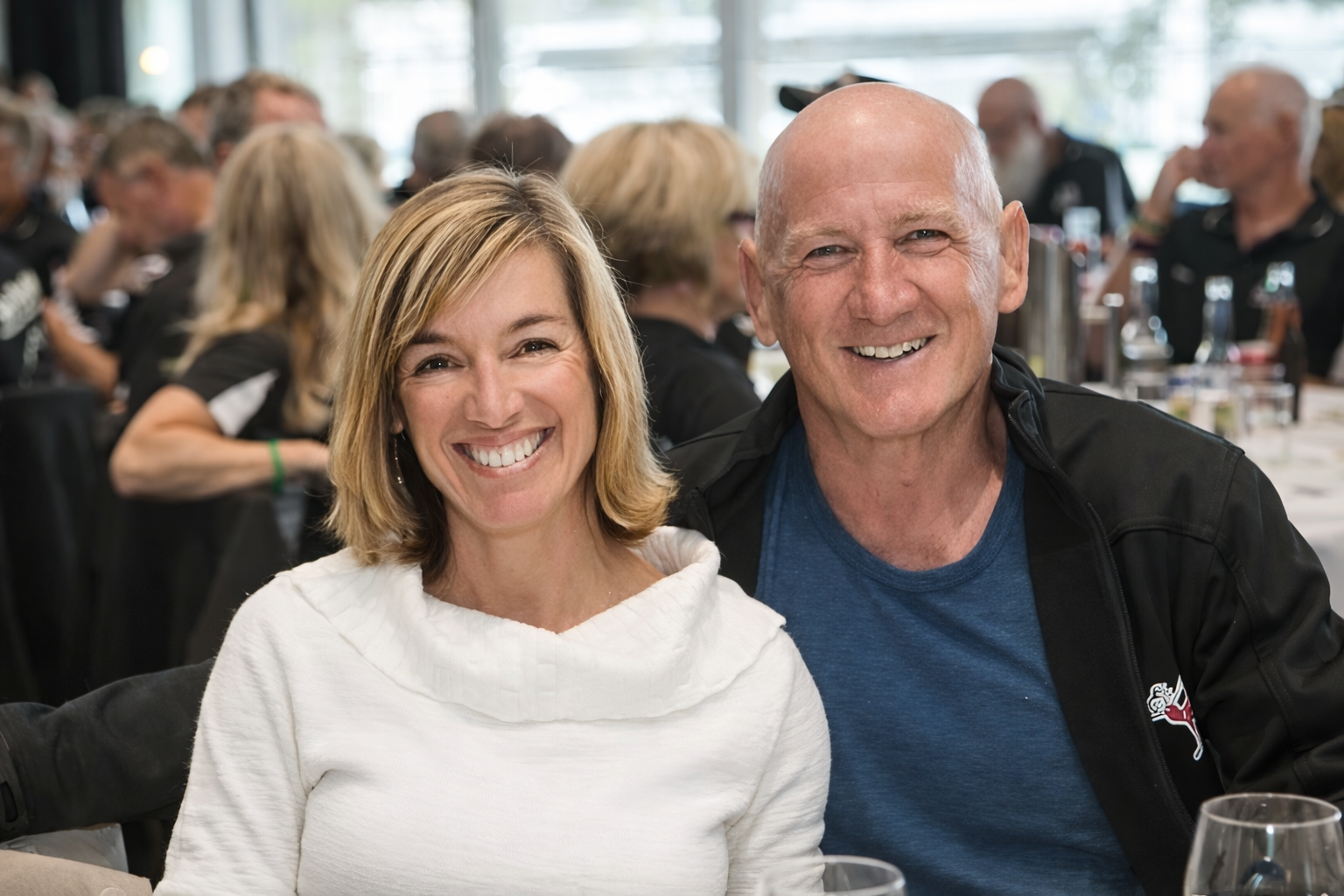
The Sam Project is focused on connecting with all Australians bringing both an awareness and an understanding of mental illness, in order to empower all Australians to live a mentally and physically healthy life.
Mission Statement
Founded in 2016 by Scott and Florence Harrod, the Sam Project was built on a simple but powerful belief: that Australians deserve not just better treatment for mental illness, but a genuine understanding of what causes it — and what each of us can do to prevent it. Scott and Florence gave up their careers and everything they owned to make that commitment real, travelling throughout Australia to bring education, conversation, and hope to communities large and small.
Founders
1 in 5 Australians will experience a mental illness this year. 1 in 2 will in their lifetime.
Rates of anxiety and depression among Australian children and adolescents have risen sharply over the past decade — making the next generation our most urgent priority.
The WHO states that 90% of people who die by suicide had a mental illness, mostly depression. Suicide remains the biggest killer of Australians between the ages of 15 and 44.
It is estimated that over 70% of mental illness is caused by our lifestyle and the world we live in today — which means most of it is preventable.
Every time the Bureau of Statistics releases its figures, mental illness and suicide rates have increased — while the health system has largely maintained the same approach.
The Reality
Why The Brain Is At The Centre Of All Of This
Mental health and brain health are not separate things. The brain is an organ — and like every organ, what we feed it, how we move, how we rest it, and how we stimulate it determines how well it functions.
This matters at every stage of life. But it matters most in the window from before birth through to around age 25 — the period during which the brain is actively forming, wiring, and maturing. What happens during this window doesn't just affect how a child feels today. It shapes the brain they will carry for the rest of their lives.
Ultra-processed food
Disrupts the gut-brain axis, drives neuroinflammation, and impairs the neurotransmitter systems that regulate mood — beginning as early as the prenatal period.
Physical movement
Drives neurogenesis, reduces neuroinflammation, and regulates the stress response. A sedentary brain is a brain under strain.
Screen time & technology
Engineered to exploit the brain's reward pathways — particularly damaging in adolescence, when the self-regulation systems that resist that pull are still under construction.
Sleep
The brain's primary repair and consolidation window. Chronic disruption — especially in young people — is causally linked to depression, anxiety, and impaired emotional regulation.
The knowledge to protect your mental health — and your children's mental health — already exists. You just haven't been told yet. The Sam Project is committed to staying at the forefront of results-based research and bringing that knowledge directly to Australians, in plain language, in their own communities. Because an informed person is in a far stronger position than one who has never been given the full picture.
Exercise is as effective as antidepressants for mild to moderate depression — with no side effects, no withdrawal, and benefits that extend to physical health, sleep, and cognitive function. Yet it remains almost entirely absent from how we respond to the mental health crisis.
The SMILES Trial — a landmark Australian study — demonstrated that dietary intervention alone produced remission in a significant proportion of people with major depression. It is among the first clinical trials to prove that what we eat directly affects our mental health. This is the emerging field of metabolic psychiatry, and it is changing what we know about how the mind and body interact. Most Australians have never heard of it.
The Reason for Hope
What Needs to Change
Better education. People need to understand the causes of mental illness, how to help themselves and those they care about, and — most importantly — what genuine prevention looks like.
A shift in how we treat. The health system needs to move beyond treating symptoms toward identifying causes — because without understanding what caused an illness, it is very difficult to treat it properly.
A proper understanding of prevention. Prevention is not waiting for something to happen and then responding. It is action taken before someone becomes unwell — and it is for the healthy population, not just those already struggling.
Community and connection. Building genuine support networks and a sense of belonging is one of the most powerful things we can do for mental health.
The physical-mental link. Physical health and mental health are not separate. Creating opportunities to understand and act on that connection is essential.
Scott and Florence travel throughout Australia. To learn more about their work or bring them to your community — get in touch.